


Is growing AI risk setting the stage for wider blockchain adoption? Vitalik Buterin certainly thinks so.
Speaking at Devcon 8 in Mumbai, India, Ethereum’s co-founder said that centralizing AI tools could lead to an AI arms race. So how can this be an opportunity for blockchain?
Structurally, blockchains operate through decentralized networks, reducing dependence on a single entity. But centralized networks suffer from single points of failure, meaning that an attack could take down the whole network.
Decentralized networks such as Ethereum reduce this risk by spreading control across multiple participants. Naturally, the question becomes: Could growing AI-driven risks strengthen Ethereum’s long-term investment case?
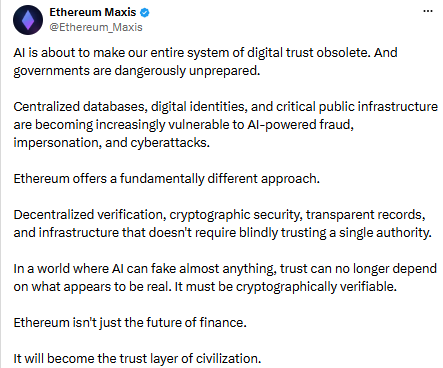
Interestingly, on-chain data is already backing this setup.
According to ValidatorQueue, the number of ETH staked on the Ethereum blockchain has reached a new all-time high of 44.3 million, which now accounts for nearly 36.3% of the total supply.
By locking up ETH, users are proving their commitment to securing the network, further strengthening its relevance as demand for decentralized infrastructure grows amid rising AI-driven risks.
That said, Ethereum [ETH] is not the only decentralized network. The bigger question is whether its established ecosystem and network security give ETH an edge in capturing this growing demand.
Rising AI risks put Ethereum’s long-term value proposition in focus
Ethereum’s network security brings its long-term investment potential into focus.
The logic is simple: Vitalik Buterin has raised the concerns about the dangers of centralized AI and introduced the concept of Defensive Decentralized Acceleration, which is based on open-source software, trustworthy hardware, and cryptography.
This could open a new growth avenue for Ethereum, making decentralized infrastructure a stronger consideration for long-term investors building their crypto portfolios.
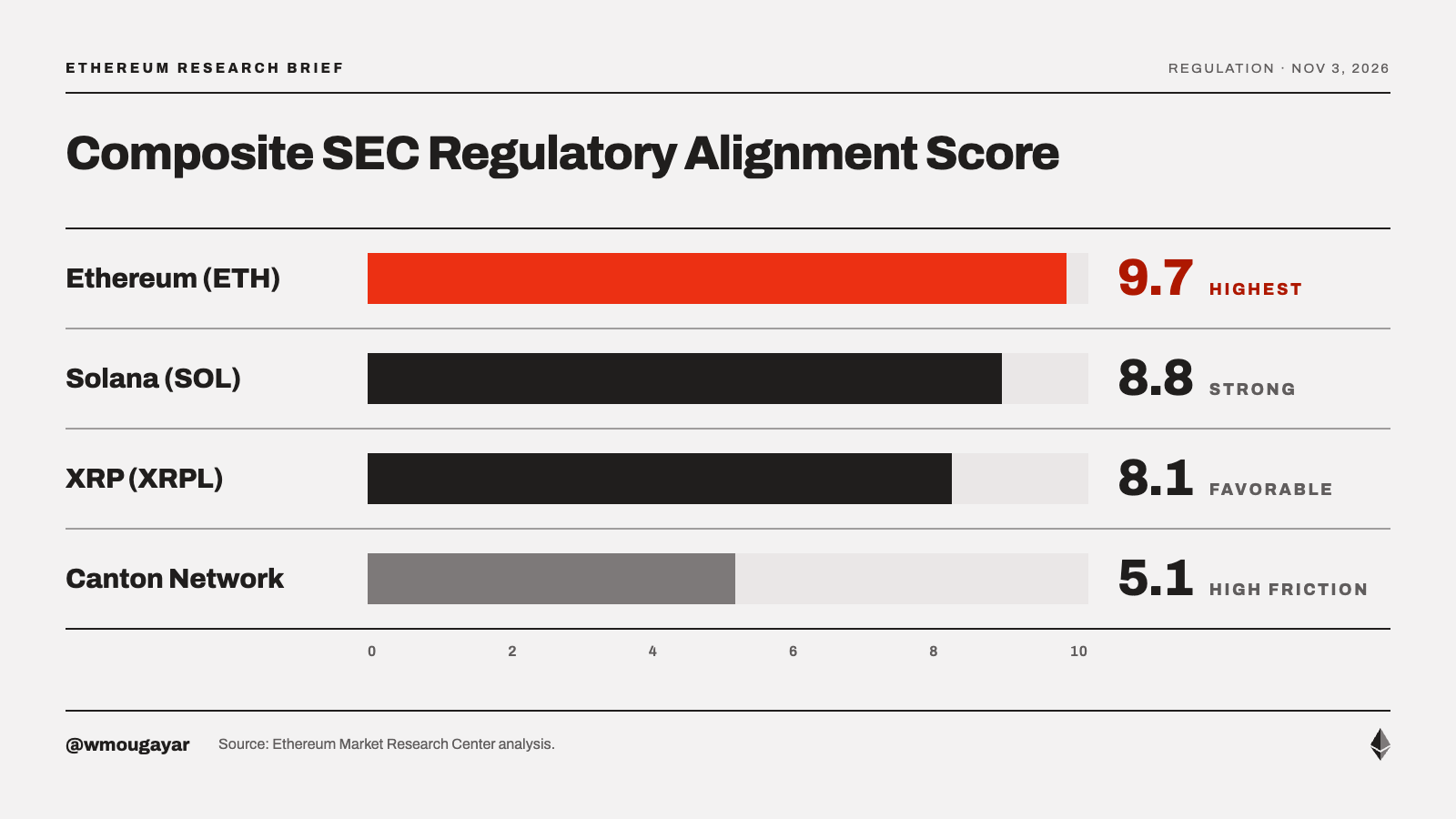
Notably, the timing is interesting. A recent analysis using the SEC’s crypto guidance found that Ethereum was the most decentralized (9.7), followed by Solana (8.8) and XRP (8.1).
This plays into the narrative around Ethereum’s decentralization. As demand grows for secure infrastructure, on-chain data is already showing Ethereum as the most decentralized option.
In this context, Vitalik Buterin’s concerns around centralized AI could be more than just a warning.
Instead, it highlights how the market may be moving towards a more decentralized infrastructure and will play to Ethereum’s advantage to capitalize on increased demand for open networks.
So, while this does not guarantee ETH price appreciation, it adds another long-term adoption narrative to its investment case.
Final Summary
-
Growing AI risks could increase demand for decentralized networks like Ethereum.
-
Rising ETH staking and Ethereum’s strong security could support its long-term investment case.



0 Comments